

A root canal treats an infected or inflamed nerve inside a tooth and lets you keep the tooth instead of losing it. With modern numbing, it typically feels no worse than a filling, and it’s what ends the toothache. Dr. Barry Diamond treats root canals at Diamond Dental in Beachwood.
Tooth pain right now? We offer same-day emergency appointments. Call (216) 206-8075.
Inside every tooth is the pulp: the nerve and blood vessels that run down through the roots. When deep decay, a crack or an injury lets bacteria reach the pulp, it becomes inflamed or infected. It can’t heal on its own.
A root canal removes the damaged pulp, cleans and disinfects the canals inside the roots, and seals them. The tooth is then protected with a filling or a crown. You keep your natural tooth, and the pain from the infection goes away.
Sometimes there are no symptoms at all, and the problem shows up on an x-ray.
Is it ever too late? If the tooth is too broken down or the infection has damaged too much of the root and bone, it may not be restorable. At that point extraction is the option. The sooner a painful tooth is checked, the more likely it can be saved.
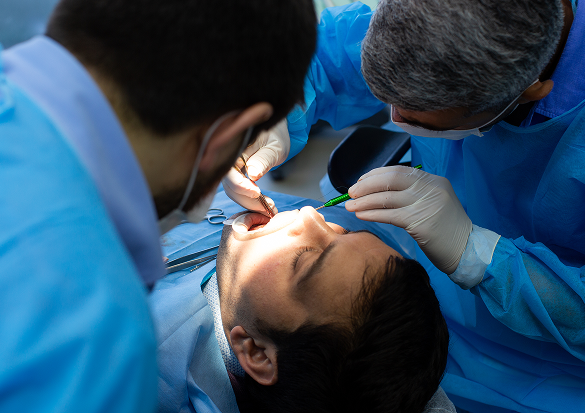
Root canals have a reputation they no longer deserve. The tooth is fully numbed first, and most people say the treatment feels much like getting a filling: pressure and vibration, not pain.
The real pain usually comes before treatment, from the infection itself. Afterward, the tooth may be tender for a few days, which usually responds to over-the-counter pain relief.
Signs a tooth may need a root canal include an ache with hot or cold that lingers after the hot or cold is gone, pain when you bite down, a pimple-like bump on the gum near the tooth, swelling, or a tooth that has turned darker. Some infected teeth cause no pain at all and only show up on an X-ray, which is one reason regular checkups matter.
Don’t wait for a toothache to settle on its own. Pain that fades can mean the nerve has died while the infection keeps spreading. Facial swelling, fever or difficulty swallowing need prompt care. See emergency dental care.
Dr. Diamond confirms the cause of the pain and that the tooth can be saved. Cold and tapping tests help pinpoint which tooth is involved.
The tooth and surrounding area are numbed. A thin rubber sheet, called a dental dam, keeps the tooth clean and dry while it is treated.
The infected pulp is removed, and the canals are shaped and washed with disinfecting solution to kill the bacteria.
The canals are filled and sealed so bacteria can't get back in. A temporary filling closes the tooth until the final restoration.
The tooth is protected with a crown, especially back teeth, so it can handle chewing again. Until then, avoid biting hard foods on that side.
Questions about a root canal? Call (216) 206-8075
Most people are back to normal activities the same or next day, and fully recovered in under a week. For the first few days:
Why you’ll probably need a crown: a root-canal-treated tooth can become brittle, and back teeth take heavy chewing forces. A crown holds the tooth together and seals it. It’s made from an iTero 3D scan, so there’s no impression putty to bite into. With a good crown and regular care, a treated tooth can last for many years, often a lifetime.

Pulling the tooth can look like the quicker, cheaper choice. On the day, it usually is. But a missing tooth leaves a gap that lets neighboring teeth shift, and replacing it with an implant or bridge typically costs more, and takes longer, than the root canal and crown would have.
Keeping your own tooth is usually the better value when it can be saved. If it can’t, Dr. Diamond will explain your extraction and replacement options plainly.
Questions worth asking before you decide:
You’ll get straight answers to each, and the choice stays yours.
The cost depends mainly on which tooth it is. A front tooth has one canal, while a molar has three or more, so molars cost more. Most back teeth also need a crown afterward, which is a separate fee. You’ll get a written fee before treatment.
Insurance: many dental plans cover part of a root canal. We’re happy to check your plan.
Paying for treatment: members of our In-House Savings Plan get 15% off needed treatment, and flexible in-house payment plans let you pay over time. We accept cash, checks and credit cards. See payment options.
Yes. General dentists treat many root canals, and Dr. Diamond treats root canals here at Diamond Dental. Some teeth are more involved, such as a tooth that has had a root canal before and hurts again, or a tooth that’s cracked. For those, see saving cracked and previously treated teeth. Dr. Diamond will examine the tooth and explain whether it can be treated here or needs a referral.
What the treatment actually does. Inside every tooth is soft tissue called the pulp, which holds nerves and blood vessels. Deep decay, a crack or a hard knock can let bacteria reach it, and once the pulp is infected it can’t heal by itself. Removing it and sealing the canals stops the infection while the tooth stays in place. An adult tooth keeps working without its pulp, because the gum and bone around the root continue to support it.
Front teeth usually have a single canal. Molars typically have three or more, some narrow or curved, which is why back teeth can take longer to treat.
Dr. Barry Diamond is a restorative and cosmetic dentist in Beachwood. He earned his Doctor of Dental Surgery at the University of Maryland and completed the University of Maryland’s Advanced Education in General Dentistry residency, where he managed complex restorative and cosmetic cases.
The office uses digital x-rays and an iTero Element 5D scanner, which takes a detailed 3D model of your teeth with a small wand instead of impression putty.

Root canal treatment deals with the pulp at the center of a tooth when it is inflamed, infected or injured. Some teeth need more than a first root canal: cracks and breaks, a treated tooth that becomes sore again, or an injury.
The type of damage decides the repair. A chip is a small piece of enamel broken off, often a front edge. Craze lines are tiny surface cracks that are common and usually harmless. A broken cusp is a chewing corner that breaks off, often around a large filling. A cracked tooth has a crack running from the chewing surface toward the root, and a split tooth has separated into two parts. Depending on the findings, the repair may be bonding, a filling, a crown, root canal treatment or, when a tooth cannot be kept, an extraction.
Occasionally a tooth that had a root canal does not heal fully, or becomes infected again months or years later. Reasons include a narrow or curved canal, new decay that lets bacteria reach the root filling, a crown or filling that cracked or loosened, or a new crack. Signs include pain when biting, swelling or a bump on the gum near the tooth, or tenderness that has come back. Retreatment reopens the tooth, removes the old filling material, cleans and reseals the canals, and the tooth is then restored. Whether it suits you depends on how much healthy tooth remains and whether the root is cracked. Dr. Diamond examines the tooth, takes X-rays and explains whether retreatment, root-tip surgery (an apicoectomy) or extraction makes sense, and whether a referral to a specialist is appropriate.
If an adult tooth is knocked out, time matters most. Hold it by the crown, not the root, rinse it gently with milk or water without scrubbing, and place it back in the socket if you can, biting gently on gauze. If not, keep it in milk and bring it with you. A tooth knocked loose, pushed out of place or cracked by a blow also needs prompt care, even if it does not hurt yet, because an injured tooth can lose its nerve weeks later. Call (216) 206-8075; see emergency dentistry.
Great experience, and pleasant staff. I looked everywhere for an office that can accommodate a wheelchair and I found Diamond Dental. Pain free. Highly recommend.

The staff and the dentist were the best I have ever experienced. Sarah was excellent and they were patient with me. I appreciate their support and professionalism.
Excellent service
Diamond dental has nice and skillful people
Had an amazing experience was clquick didn’t hurt everyone was professional if I could give ten stars I would
Very friendlyand attentive great staff
Cosmetic cases completed by Dr. Diamond with porcelain veneers. Ask about veneers.
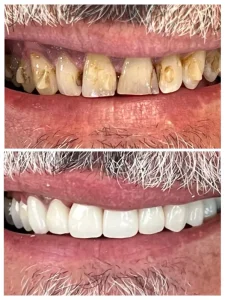
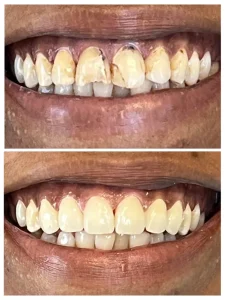
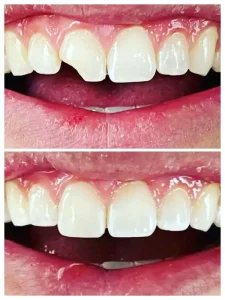
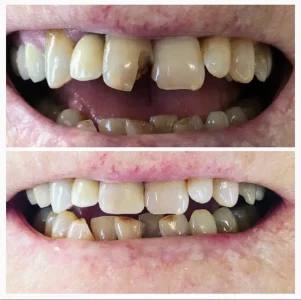
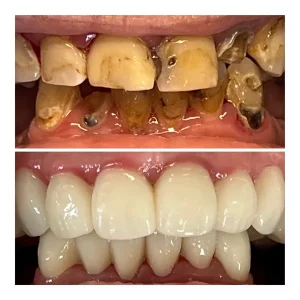
Treatment removes inflamed or infected tissue from inside the tooth.
Cleaning and sealing the canals can prevent the need for extraction.
A final restoration protects the treated tooth and restores normal function.
These answers address common questions about root-canal therapy, including evaluation, timing, comfort, alternatives, and maintenance. They provide general information only; an examination is necessary to determine what is appropriate for an individual patient.
The tooth is numbed first, and most people say it feels like getting a filling. The toothache before treatment is usually worse than the treatment. Expect some tenderness for a few days afterward.
It depends on the tooth. Molars have more canals and cost more than front teeth, and most back teeth also need a crown. You’ll get a written fee first. Insurance often covers part, and we offer a savings plan and in-house payment plans.
Lingering sensitivity to hot or cold, pain when biting, swelling or a bump on the gum, or a darkening tooth are common signs. An exam and x-ray confirm it.
Pulling usually costs less on the day. But replacing the tooth later with an implant or bridge usually costs more than saving it would have. If the tooth can be saved, a root canal is usually better value.
Most people are back to normal within a day or two and fully recovered in under a week. Chew on the other side until the final crown or filling is in.
Usually, for back teeth, because they take heavy chewing forces and a treated tooth can become brittle. Front teeth sometimes only need a filling.
An infected pulp won’t heal by itself. The infection can spread into the bone and form an abscess, and the tooth may become impossible to save. See a dentist promptly, even if the pain fades.
Yes. General dentists treat many root canals, and Dr. Diamond treats them here. More involved cases, such as retreatment, are assessed individually.
Sometimes. Retreatment cleans and reseals the canals again. Dr. Diamond examines the tooth and X-rays and explains whether retreatment, surgery or extraction is appropriate.
A minor surgery that removes the tip of the root and seals it when infection remains after a root canal. Dr. Diamond explains whether it applies to you and whether a specialist referral is appropriate.
It depends on where the crack runs and how deep it goes. Some cracks are repaired with a filling or crown, some need root canal treatment, and a split tooth may not be saveable. An examination is needed.
Book a root canal visit online or call (216) 206-8075. Same-day emergency appointments are available. You’ll leave knowing whether the tooth can be saved, what treatment involves and what it would cost.
Patients visit us from Beachwood, Lyndhurst, South Euclid, Pepper Pike, Orange Village and Chagrin Falls.